Watching a final and wondering who decides what you see? Esports broadcast production explained in one line: observers pick the in-game shots while a control-room crew adds replays, graphics and sound.
This guide goes deeper on one part of how to watch esports: the crew and kit behind the picture.
| Item | Value |
|---|---|
| Crew at the 2018 Overwatch League Grand Finals | More than 100 crew members |
| Weight of that event’s main LED wall | 23,636 pounds |
| Semi trucks needed to bring the wall in | 21+ semi trucks |
| Blizzard Arena studio size | 11,000 sq ft |
| Blizzard Arena studio seating | Up to 450 fans |
These figures come from Sports Video Group’s July 2018 report on the Overwatch League Grand Finals and its March 2018 look at Blizzard Arena. They describe 2018 setups and can change, so check the sources before you rely on them.
What does an esports broadcast crew actually do?
A live esports show layers many parts together. British Esports lists on-air talent, gameplay feeds, live graphics, music, lighting, staging, camera mixes and streaming as the pieces that combine into one broadcast, managed from pre-production planning through to the live show.
The work can happen in a studio’s own dedicated facilities, or at remote stages and stadiums where the team and equipment travel to the location. The same source splits crew roles into two groups:
- Often full-time with production companies: executive producer, producers, graphic designers and operators, technical managers, multi-skilled studio operators and content writers.
- Often freelance: camera operators, sound operators, floor managers, technical directors, AV and lighting technicians, replay operators, in-game observers and makeup artists.
Replay shows how specialised the jobs are. British Esports says replay operators need good knowledge of specific games, and that Vmix Replay or EVS systems are usually used in esports productions.
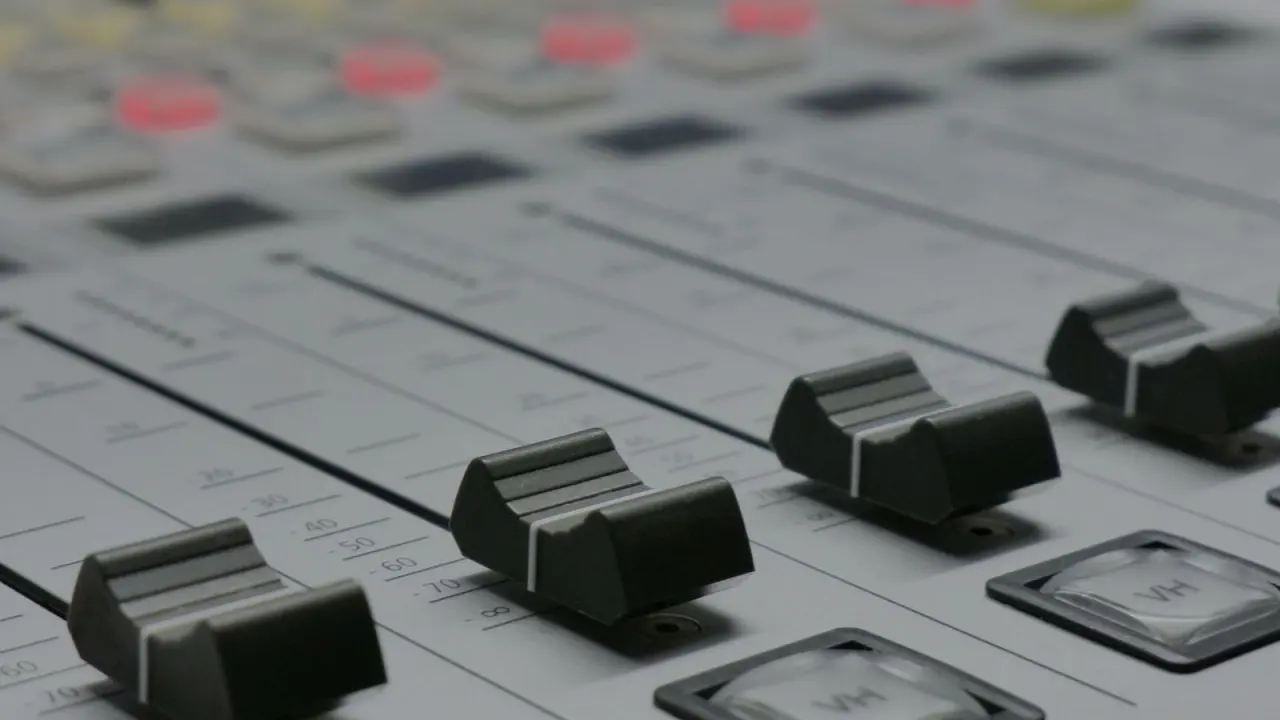
The technical director, meanwhile, runs a vision mixing desk: a panel of buttons used to choose the correct camera, gameplay or video feed. Source: British Esports.
The observer: a camera operator inside the game
The most distinctive job is the observer. In Sports Video Group’s December 2019 report, the role is described as driving the views of the action from inside the game itself, choosing the shots that tell the story, in effect a camera operator inside the videogame.
In the early days of esports, that task was reserved for the on-air talent. As productions grew larger and more complex, the role earned its own place on the crew list.
FEED Magazine calls observers the storytellers, often former professional players with intimate knowledge of the game. It adds that producers should work closely with them, giving them triggers to populate graphics and switchers: FEED Magazine, August 2024.
How many observers a show needs depends on the game. FACEIT’s Andrew Lane told SVG his team works from the game’s core philosophies backwards, a process that “isn’t always having a lot of people but sometimes is”.
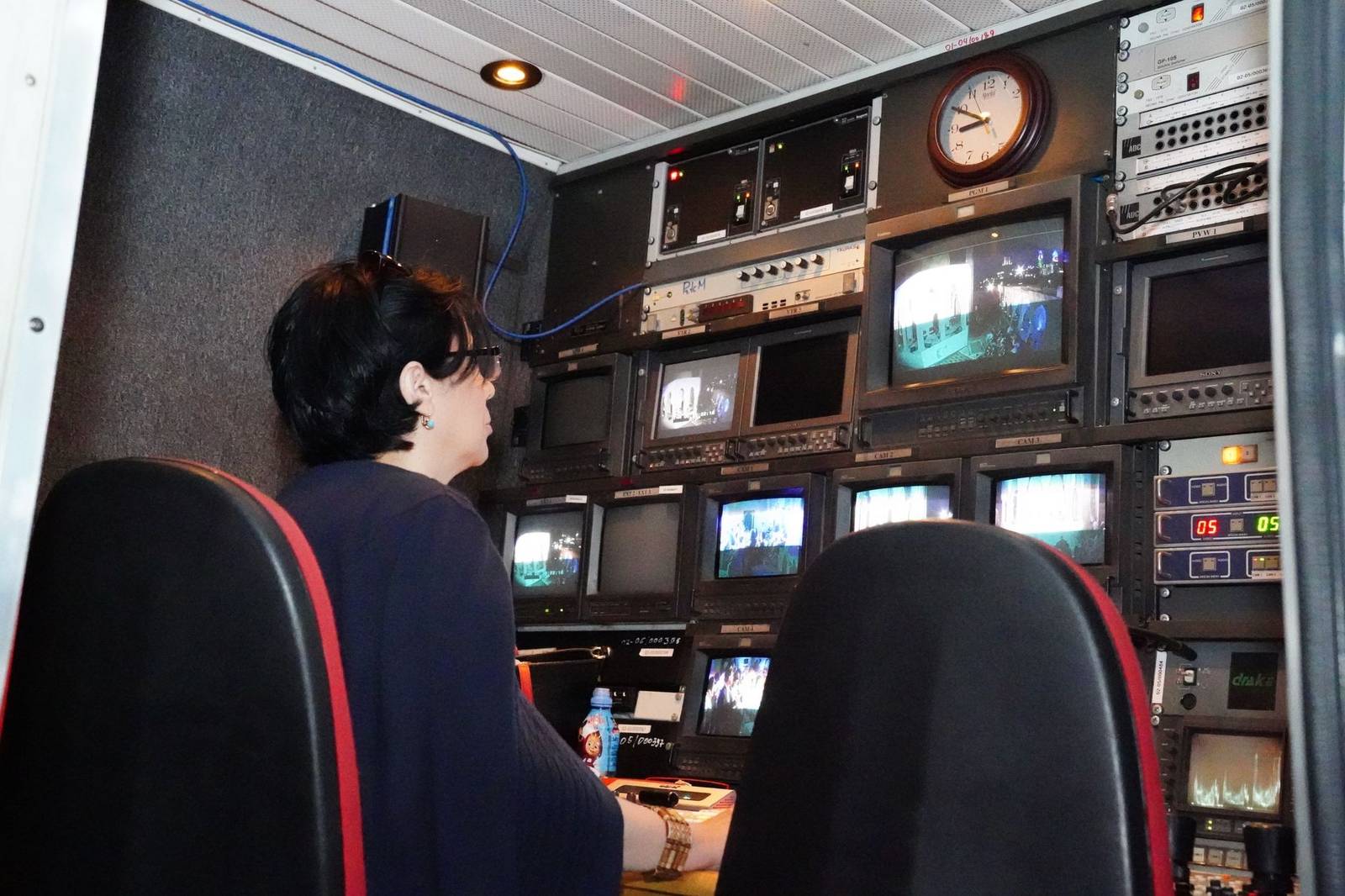
Inside a live control room and observer room
The July 2018 Overwatch League Grand Finals, produced by Blizzard Entertainment, shows how the layers fit together. SVG reported an operation involving more than 100 crew members at Barclays Center in Brooklyn.
The show used NEP’s EN3 mobile units for the main production, with a separate BT-1 auxiliary truck customised as the observer room. The same report says the signal flow was a hybrid of HD-SDI broadcast feeds and DDI digital computer feeds, integrated through the same router.
- EN3 A unit: the primary control room, audio, EVS replay and camera shading.
- EN3 B unit: the edit, transmission and IT teams.
- BT-1 truck: the observer room, producing in-game action such as live first-person POV and Free Cam.
FEED Magazine points out why this differs from traditional sport. The team in the truck there focuses on cameras and replays covering the field of play, while esports production must also present what is happening within the game: FEED Magazine, August 2024.
The venue side: LED walls, player comms and hardware
Big finals are also stage shows. The Grand Finals wall weighed 23,636 pounds and needed 21+ semi trucks to roll in, according to SVG’s July 2018 report.
A permanent home looks different. Blizzard Arena in Burbank opened in October 2017 with an 11,000 sq ft studio that seats up to 450 fans, as part of a 74,000 sq ft, five-level facility with two control rooms, an observer room and nine edit suites, according to SVG in March 2018.
Blizzard’s senior director of global broadcast, Pete Emminger, said the arena’s LED is “completely reactive to the game”, driven from the game engine. Players compete at 144Hz, which means short cable runs, so the gaming hardware sits in racks next to each team’s area on stage.
Each team also gets its own audio console. Emminger said this is “to maintain tournament integrity”, so there is no chance of a configuration mix-up. Source: SVG, March 2018.
If you would rather see that kind of staging in person, read about attending esports events live.
How game data and battle royale change the story
Not every game tells its story the same way. At SVG’s 2019 summit, ESL Gaming’s Simon Eicher said, “We don’t have just a hardcore audience anymore,” so replay features and different angles help break up the game and make it more explanatory. SVG, December 2019.
Battle royale is the hard case. Next Generation Esports’ Andrew Wagnitz compared it to golf: you cover one hole, then another, and build a story around the whole day, as he described while discussing the 2019 Fortnite World Cup in New York.
Scoring adds a wrinkle. Do Not Peek Entertainment’s Scott Smith noted there is often “no perfect winning moment”, because players may have to add up scores from eight or nine rounds. Source: SVG, December 2019.
Data is the other big factor. FEED Magazine says the pace of esports is too quick for operators to provide integrated statistics and graphics in real time, so automation fills the gap; during a time-out, for example, cues for music and other elements are entirely automated. FEED Magazine, August 2024.
At Intel Extreme Masters Cologne 2023, a Ross Video team integrated game APIs and devices into the production workflow, which let IEM keep fans informed with AR graphics without additional operators. The same report says that event drew over 700,000 fans online, per FEED Magazine.
FEED also reports that Riot Games won the Sports Emmy for outstanding esports championship coverage at the 45th Annual Sports Emmy Awards, for the League of Legends Worlds 2023 Final at the Gocheok Sky Dome in Seoul. It was Riot’s fifth win at the awards, as reported on 14.08.2024.
How remote production and streaming shape what you see
Most viewers are not in the arena. FEED Magazine notes that much esports content is consumed on mobile and digital devices, including through platforms like Twitch and YouTube; our overview of esports streaming platforms covers where to find matches.
Television still plays a part. In July 2018 the Overwatch League Grand Finals streamed via Twitch, MLG.com and OverwatchLeague.com, while live coverage aired on ESPN and Disney XD, per SVG.
Because there are no external TV crews from sports channels at most esports events, organisers must plan and produce the show themselves. FEED Magazine adds that multiple diverse fibre connections in and out of the venue are imperative to guard against internet faults.
Deloitte estimated that the esports audience would grow from 532 million in 2022 to 640 million in 2025. It warns that broadcasters forcing a traditional sports approach may face large capital investment requirements, non-scalable infrastructure and difficulty localising content for an international audience.
Frequently asked questions
What is an observer in esports?
Show answer
An observer is the camera operator inside the game, choosing which views of the action go to air. SVG’s December 2019 report says the role began with on-air talent before becoming its own crew position.
Is esports production very different from traditional sports broadcasting?
Show answer
Less than you might expect. SVG’s report on its Esports Production Summit says it comes down to a common foundation: storytelling, though esports adds in-game observers and heavy automation.
Why do esports broadcasts need automation?
Show answer
The game generates a huge amount of data, and operators cannot keep up by hand. FEED Magazine says triggers and cues are typically a mix of in-game data signals and automatic feeds.
Who works on an esports broadcast?
Show answer
Producers, directors, graphics operators, replay operators, camera and sound crews and observers all contribute. British Esports notes that many productions mix full-time staff with freelancers.